About Heather
Leadership experience.A deeper curiosity about people.
I'm Heather Yun, an ICF Professional Certified Coach (PCC) based in the Chicago area.
Before becoming a professional coach, I spent more than 20 years in the corporate world, building my career across human resources, organizational development, and business leadership.
For more than twenty years I helped decide who was ready to lead. Now I sit on the other side of that table, and ask, and listen, and stay with them.
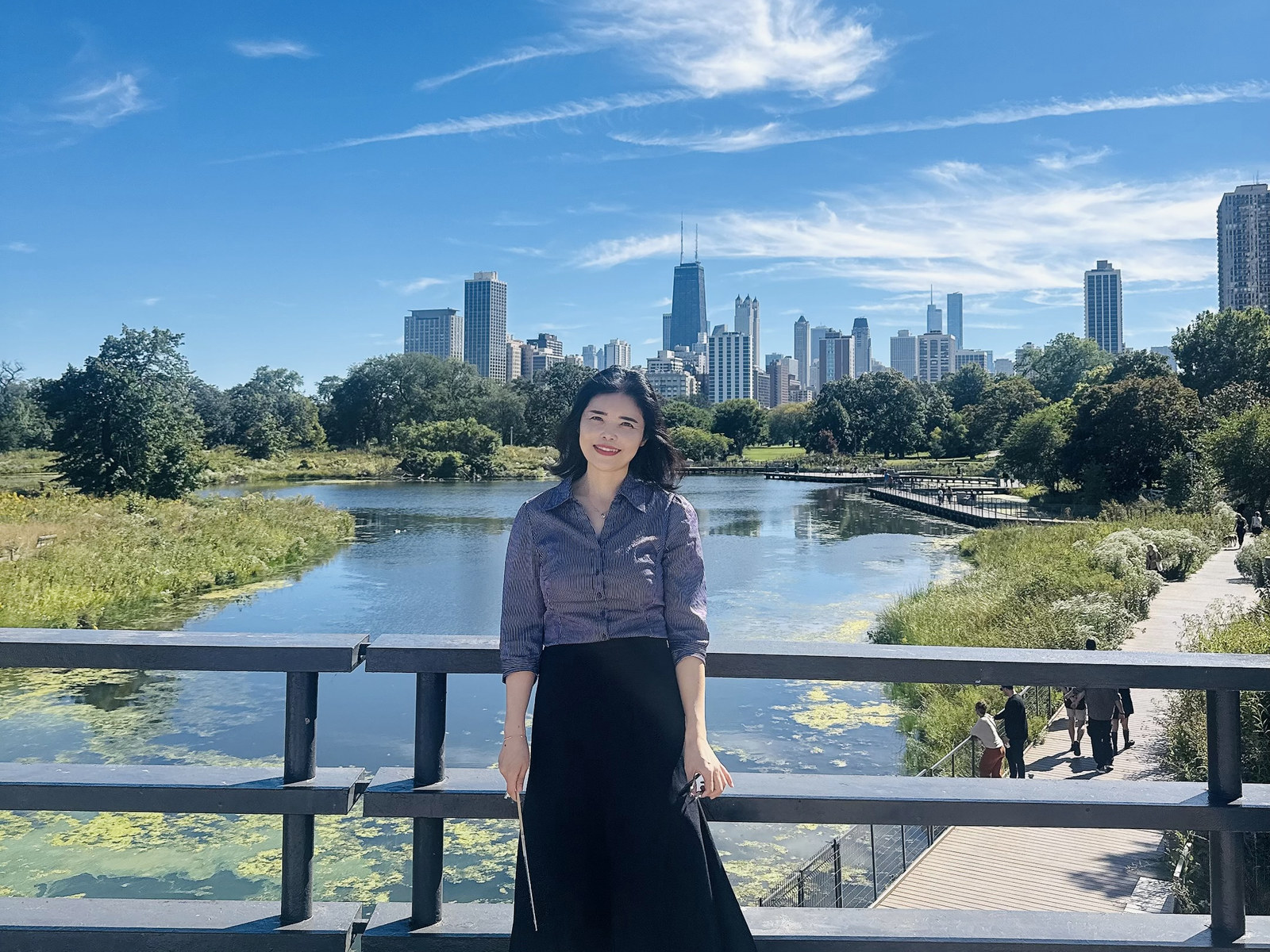
As Chief Human Resources Officer at Fursys Group, I worked directly with the CEO and senior leadership teams on talent, leadership development, organizational strategy, and change. My responsibilities spanned the group's affiliated companies.
Earlier in my career at Doosan Group, I spent nearly 18 years developing leadership and talent systems, facilitating organizational learning, and working with executives across different businesses and functions.
Later, I moved beyond HR into business leadership, serving as Head of Planning for a business division. I led the teams covering strategy, marketing, product planning, and training, working closely with R&D and manufacturing to connect business priorities with execution.
My experience also included working with business leaders in the United States and supporting organizational development for U.S. market entry.
These experiences gave me a broad perspective on leadership — from supporting executives and designing organizational systems to personally navigating business decisions, competing priorities, and the challenges of leading teams.
But throughout those years, my curiosity about people continued to deepen. I became increasingly interested in something less visible than strategies or systems: the beliefs, emotions, aspirations, and personal stories behind the choices people make.
That curiosity eventually brought me to coaching.
I drew the lines
Accepting the Jerusalem Prize in 2009, Murakami said that between a high, solid wall and an egg breaking against it, he would always stand on the side of the egg — even when the wall is right. That line stayed with me for years before I understood why. I had spent my career on the wall's side.
Performance ratings. Years in grade. The succession shortlist. The boxes on a reorganization chart. All of it is built to help people, and much of it does: an organization with no standards is run by whoever is loudest, and that is far crueller. But every one of those instruments does the same thing. It puts people in a single line, so that a decision can be made.
There is something only the people who build them know. However well the thing is made, to each person standing in front of it, it is still a wall.
That is why I now sit on the other side of it.
My Coaching Philosophy
I believe every person is whole and has the capacity to find their own way forward.
As a coach, my role is not to provide answers but to create a space where people can hear themselves more clearly, question familiar assumptions, and discover perspectives they may not have seen before.
The work doesn't end when a session does. After each conversation I take time to reflect — not only on what my client discovered, but on how I showed up. What did I notice? What might I have missed? Where might my own assumptions have shaped the conversation?
Going back through my session records, I wrote down what I had actually chosen to do — and, more often, what I had chosen not to do. Five of those sentences:
Coaching happens twice.
Once in the room, and once after you leave it. Awareness happens in the room; what changes, changes outside it.
Big words are left empty.
Ambition. Presence. Strength. Confidence. Each has a dictionary meaning and a different private one for every person. If I fill them in for you, I have handed you one more standard to measure yourself against. You fill them.
Stay one more layer down.
Beneath the facts and the feelings are the standards a person is choosing by. Most conversations end on the first floor. The skill is less in inventing a new question than in being willing to stand still and ask once more.
The opposite of a strength is not a weakness.
It is the same strength overused. A knotted muscle is not a weak one, so the question is not whether to give the strength up, but when and how much to use it.
Intervene as little as possible.
Not asking is also an intervention. Silence is not the absence of a choice; it is the choice I made. Ask less, stay longer.
Who I Work With
Their circumstances differ. I meet each person with the same belief: meaningful change begins with discovering something new about ourselves.
Managers and leaders who now lead people
You were promoted for what you were excellent at, and the new seat asks for something else entirely. Doing the work well and getting it done through other people are not the same skill. Most of my clients arrive somewhere in that gap.
Leaders facing a career wall, or wanting a change
"If I am not going further here, what am I working toward?" Whether the ladder has stopped, the work no longer stretches you, or you want to turn toward something different — the question has no one else to answer it.
People whose work is judging other people
HR leaders, hiring managers, founders deciding who stays. I did that for more than twenty years. I know what it costs, and what it quietly does to the way you see everyone.
Individuals in transition
Career choices and changes, relationships, identity, and the quieter question of what matters most — with or without a leadership title.
Beyond Coaching
Literature, art and philosophy are not a hobby I keep off to one side. They are where my way of thinking about people came from, and they turn up in sessions more often than I expect.
My own coaching principles began with a designer. Dieter Rams left behind the Ten Principles of Good Design, and the last of them is that good design is as little design as possible. Keep what is necessary; take away the rest. He held to that for a lifetime, and it is why his work still looks unhurried decades later.
I think coaching works the same way. It gets better not by adding one more good question, but by removing the interventions that were never needed. Fill the three seconds after a client stops talking with a well-made question and you will receive the answer to your question — nothing more. That is why my fifth principle is intervene as little as possible, and it is where ask less, stay longer comes from.
Proust on how the meaning of a memory is found in the present. Mencius on how we choose our work and the work then shapes us back. These have changed my practice more than most coaching texts. I treat coaching as a profession and as an education that is still running, and I expect what I believe about it to keep changing.
Career
2023 — Present
Heather Yun Coaching
Leadership & Executive Coach
2024 — 2025
Fursys Group
Head of Planning, Office Furniture Business Unit
2021 — 2024
Fursys Group
HR Vice President / Chief Human Resources Officer
2015 — 2021
Doosan Group
HRD Planning & Operations, Corporate Learning Center
2003 — 2014
Doosan Group
HR Planning, Group Human Resources
Education & Credentials
Education
Seoul National University, Seoul — BA in German Language Education and BBA in Business Administration, completed as a double major (1999–2004).
Credentials
- ICF Professional Certified Coach (PCC)
- KPC (Korea Professional Coach), Korea Coach Association
- 800+ Hours of Professional Coaching Experience
- Former CHRO & Business Leader
- Based in the Chicago Area
Let's start a conversation.
Whether you're exploring coaching for yourself, developing leaders in your organization, or considering a professional collaboration, I'd welcome the opportunity to connect.
Get in Touch